Tampilkan postingan dengan label Museum. Tampilkan semua postingan

Saga du Rhum museum


The Saga du Rhum museum, located in St Pierre, in the south of Reunion, is on the site of the Isautier family estate. Although centred on rum, you learn about Reunion's history and the importance of  local sugar cane agriculture and industry.

outside the museum (source)

Set up by the eponymous family in 1845 Isautier is one of the oldest rum distillers on Reunion Island, and it still produces rum today. Rum is the world's fourth most popular spirit after liqueur, whisky and brandy, and ranks first in the colourless spirit category ahead of gin and vodka. French overseas departments produce 40% of all the rum sold in Europe.


On arrival at the museum you are greeted outside by samples of different varieties of sugar cane (such as Mapou, Tamarin, Guingham or R570). Rum is a spirit produced exclusively through the alcoholic fermentation and distillation either of molasses from the sugar making process, or cane juice. Explanatory panels explain that the word rum ('rhum' in French) comes from the (English) word "rumbullion" meaning trouble, agitation and great tumult.

a variety of sugar cane stalks (source; © J.-Y. Hoarau)

On entering the museum there are more panels explaining the general history of sugar cane, and we learn that sugar cane arrived in Réunion  (and later Mauritius) in 1665. During the 17th and 18th centuries all of the sugar cane grown on Reunion was used exclusively to manufacture alcohol - sugar production only came later! Reunion grew coffee, spices and food crops, and Ile de France (Mauritius) grew sugar.

machetes for harvesting sugar cane (still used today)

Initially on the island sugar cane was used to make a fermented cane wine (fangourin), then a stronger spirit called gildiv or tafia, and finally arack, ancestor of today's rumIncidentally the word gildiv is apparently a contraction of the English 'kill-devil' - no guesses why!

alembics were used to distil rum before
column stills started to be used

When France lost possession of Ile de France in 1815 it consequently lost most of its sugar production, so sugar cane was encouraged as an export crop on Reunion. With the industrialisation of sugar production at the start of the 19th century and the increase in the number of processing plants, much of the sugar cane juice was used in sugar production. The distilleries used the residue from the sugar crystallisation process – molasses – to manufacture traditional rum from processing plants.
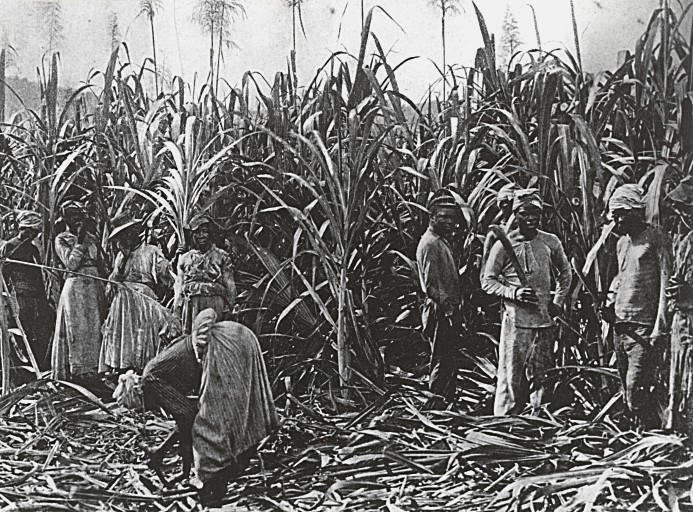
Cane cutters in Reunion in the 1880s (source)

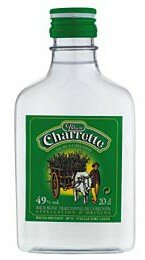
In 1928 there were 31 rum distilleries, but by 1972 only three were left: Isautier, Savanna and Rivière du Mat. That year they joined forces to create the GIE Rhum economic interest group. Together they launched the Rhum Charette brand and embarked on a diversification programme: improving ageing techniques and creating ranges of punches and liqueurs. Today production capacity has never been so high.

pile plate, a popular 20cl flat bottle of Rhum Charette (source)

Sugar cane is now found in 76 countries and is world agriculture's largest crop; 70% of the world's sugar production comes from cane (as opposed to beet). In Reunion it covers about two-thirds of the island's arable land, and Reunion is the leading European producer of sugar cane - and 7th world-wide.

Reunion sugar cane field in flower (© Serge Gelabert)

After this introduction to sugar a walk along a footbridge brings you to a 1940s mill on display; the only complete mill on the island, it has been left in its original location. Such mills are necessary when dealing with sugar cane as the cane's hard stalk casing needs to be crushed to extract the juice. 

the mill consists of a steam engine, a fibre-removing machine,
three crushers and an evacuation pipe for residue.

Each mill consists of three steel cylindrical rollers as the outside casing contains juice-filled cavities which a single pressing can leave intact. This mill, which was in activity until 1980s, crushed 5 tonnes of cane every hour, and the material left over once all the juice has been extracted is known as bagasse, which can be re-used as an energy source. Reunion's two remaining sugar refineries, Gol and Bois Rouge, both use bagasse during the sugar cane production period on Réunion (≈ June to ≈December) to generate electricity; it's currently the island's second source of renewable energy.


Once the juice has been extracted the next stage is fermentation, which is done by adding yeasts which secrete enzymes and thus transform the sugar into alcohol. For traditional rum fermentation takes 24 hours, and produces an alcoholic wine with an alcohol level of 8-8.5° which is ready to be distilled. The longer the fermentation and the purer the substances the more differences in taste there are.

Fermentation (source)

Then comes the distillation which is when the product acquires its ultimate flavour. The column still allows the distiller to choose between the non-alchoholic substances which should be retained and those which are likely to reduce the rum's market value by giving it an unpleasant odour or taste.

old copper column still 

Finally comes the blending, storage and ageing in wooden casks. Often these casks are old cognac or whisky barrels. For example Old  Rum matures for at least three years in oak barrels of no more than 650 litres. Due to the tropical climate in Reunion evaporation rates (the angel's share) are higher than in more temperate regions.

casks used for storing and ageing

Traditional industrial rum is made from molasses, and traditional agricultural rum is made from cane juice. The 2012 production of the Isautier distillery in figures:
  • 1 million litres of traditional industrial rum for 2 388 tonnes of molasses.
  • 750 000 bottles of light rum for 380 tonnes of molasses (light rum has practically the same alcohol content as white traditional rum but a more neutral taste and is widely used in the liquor industry especially for making punch).
  • 36 000 bottles of traditional agricultural rum for 226 tonnes of sugar cane juice.
A bottle label from Savanna

Even though alcohol consumption is lower in Reunion (10.5 l) than in mainland France (12.9 l), alcohol addiction amongst men is more frequent in Reunion. There are more teetotallers in Reunion compared to mainland France, but there are also more binge-drinkers. Although rum consumption in Reunion has decreased (in favour of imported drinks such as whisky, beer and wine), rum is still the island's most popular alcoholic beverage. Overall alcohol consumption has decreased by 41% in the last 30 years.

"I'm stopping rum" a fresco at Le Port prison (source)

After a final section of the museum on the history of Reunion island, rum and sugar cane, the visit ends with a visit to the rum-tasting room. Cheers!

part of the selection of rums that can be tasted (source)


Useful links:

a sugar cane juice machine

Further reading:

You might also like:

Maison Rouge & the Indian Ocean Decorative Art Museum


The Indian Ocean Decorative Art Museum (Musée des Arts Décoratifs de l'océan Indien, or MADOI) opened under its present form in December 2008 at Saint Louis

aerial view (source)

It consists of modern buildings housing temporary exhibitions, located on a former coffee and sugar estate known as Maison Rouge. The 'modern' buildings are in fact the estate's converted stables. 

aerial view (source)

Originally created in 1986, the MADOI received the Musée de France label in 2002 before its present renovation and re-opening in 2008. 

aerial view (source)

Its collections cover the decorative arts proper to the Indian Ocean: furniture, ceramics, photography, architecture, fine arts etc. When we visited (April 2013) the current exhibition was called "On the trail of the tiger - in search of the Dragon's breath" and centred on Chinese decorative art.

entrance to the MADOI

The main Maison Rouge house was built in 1750 by Jacques-Francois Desforges-Boucher, Governor of Bourbon (Reunion) at the time. Changing owners over the years it grew in size, and an upstairs floor was added around 1830. The central and elevated location of the master's house meant all the agricultural activity of the estate could be overseen.

Main house, Maison Rouge

While the front of the house was covered in wooden planks, the sides and back were covered in wooden shingles, known locally as bardeaux.

front and side of the house, showing planks and shingles respectively

The house has not been lived in since at least 1971, and a (badly needed) renovation project is currently underway. 

old photo of Maison Rouge (source)

Servants quarters and various outbuildings (kitchen(s), warehouses, pigeon loft, ironing room, cellar, patio, etc) were located behind the master's house.

Outbuildings to the side of the house; note the pond in front

Behind the main house and its annexes was a large orchard, a vegetable garden and a patch for growing medicinal plants.

calabash growing in the orchard

What makes Maison Rouge special is the fact that it is the last coffee estate in the French overseas departments from the 18th century to have withstood time, largely due to the fact that it is located between two steep-sided ravines.

part of the garden surrounding the house

Its layout is directly copied from the 17th century European rural manor house model: frontal access, a centrally positioned main house, the presence of farming and service buildings, a distinction between the front and the back of the estate, and a fence around the entire unit.

watercolour by Patu de Rosement of early 19th century
coffee cultivation on Bourbon (source)

Today it's still possible to see the argamasas or flat surfaces that were used to dry the coffee berries. As the cultivation of coffee declined on the island, sugar cane was introduced to the estate and a processing plant was constructed in 1835. However the latter was destroyed in 1920 when a large fertiliser warehouse was built to replace it.

Maison Rouge argamasas (source)

Across the road from the main part of the estate is a large banyan tree, which would have been used as a place of worship by the estate's Indian indentured labourers before the current temple was built. It was originally surrounded by a garden where plants known for their medicinal, magical or religious properties were grown.

Banyan tree


For more information visit http://madoi.re (in French only) or the Facebook page: www.facebook.com/madoireunion.

If you enjoyed this post you might also like:

Suggested reading (in French):

If you read French you might enjoy Fantômes Blancs, a graphic novel in two volumes (1: Maison rouge and 2: Bénédicte), set at Maison Rouge. The scenario is by Appollo, whose graphic novel Bourbon Island 1730 I review here.


Coelacanth - the 'fossil fish'

Last night was the 2012 edition of Museum Night, an international event when many museums are open to the public on a Saturday evening, generally until midnight.

Saint Denis' Natural History Museum (source)

We took the occasion to revisit Saint Denis' Natural History Museum, where there was a special exhibition about La Perouse, a famous French explorer whose two sailing vessels disappeared in 1788 in the South Pacific (they were later found to have been shipwrecked in the Solomon Islands).

In the one of the Museum's display cabinets is this impressive fish:

Coelacanth, Saint Denis' Natural History Museum

It's a West Indian Ocean coelacanth (Latimeria chalumnae), a fish that was known only through fossils and 'rediscovered' by scientists in 1938 off the coast of South Africa. Sole survivor of a very old group of fish thought to have become extinct over 70 million years ago, it was considered the 'missing link' between fish and tetrapods (vertebrate animals having four limbs). Its discovery by Captain Goosen off East London (South Africa) caused a sensation in the scientific world. It was preserved by local museum curator Marjorie Courtenay-Latimer, from whom it takes its Latin name.

Brass plate at Latimer's Landing, East London (source)

Found just before Christmas it was too big to fit in a bath, and no deep freeze could be found so it was wrapped in cloths soaked in formalin for four days before she could find a taxidermist could skin and preserve it - unfortunately the internal organs were lost in the process. South African university Professor JLB Smith identified and named the coelacanth, and initiated a search along East Africa for further specimens. It was 14 years before Captain Eric Hunt preserved a second specimen, from the Comoros. Local fishermen had long known of the fish's existence, but it was not targeted because it was poor eating.

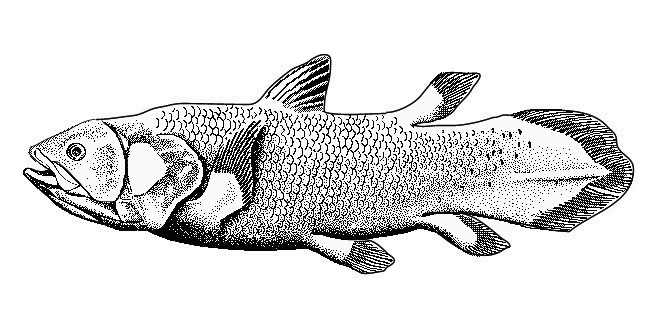
Drawing of a coelacanth (source)

Coelacanths are primitive bony fish with lobed fins. Their scales have sharp prickly spines, and most of the skeleton is made of cartilage (like sharks). They can grow to be nearly 2 metres long and weigh up to 100kg. They have been found off Kenya (2), Tanzania (22), Mozambique (1), South Africa (24), Madagascar (4), and the Comoros (200+), and it's in this latter country that I saw this specimen in 2000 in Moroni's National Museum:

this coelacanth was caught in 1985

In the Comoros, where they are known as gombessa, most specimens have been caught off the islands of Grande Comore and Anjouan. Along with ylang-ylang cultivation (flowers used in perfume) the coelacanth is one of the small island nation's few claims to fame.

ylang-ylang in my garden

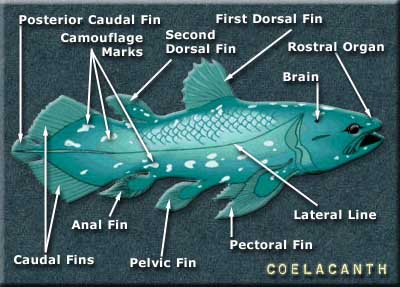
Individual coelacanths can be identified by the distinctive pattern of white spots on the dark slate coloured body. They eat a range of fish, squid and octopuses which they probably swallow whole, as un unusual 'hinge' in the head allows the coelacanth to open its mouth very wide. They are ovoviparous, which means that after mating and internal fertilisation the large eggs (about the size of an orange - 9 cm  diametre)  are retained in the female, and live young pups are born. (A single coelacanth caught in Mozambique contained 26 near-term pups each about 32 cm long).

Coelacanth anatomy (source)

About 120 species of coelacanth are known from fossils. In 1997 a separate  species, Latimeria menadoensis, was discovered to live off the coast Indonesia. In the western Indian Ocean they live at depths of 54-700 metres, and in 1998 the total population of the West Indian Ocean coelacanth was estimated to have been 500 or fewer; they are consequently considered critically endangered.


A few facts about the Comoros Islands:

    photograph by French diver Laurent Ballesta

    Related post:

    Further reading:

      Suggested books:

      Dubious humour?